
How the Program Works
A comprehensive organizational framework that ensures consistent development opportunities, competitive experiences, and clear communication standards across all age groups within FutsalRVA — whether your player is already part of the program or you're exploring it for the first time.
Competition Philosophy & Structure
Learning Environment
Competition serves as a laboratory for testing skills and concepts learned in training, providing authentic feedback on player development.
Development Priority
Long-term player growth takes precedence over short-term results. We make decisions that support learning even when they may not maximize immediate winning.
Hybrid Playing Time Model
Playing time distribution balances development needs, competitive readiness, and fair opportunity across the roster throughout the season.
Consistent playing groups during defined periods of 4 months, allowing players to develop chemistry, understand roles, and build team cohesion.
Minimum Competition Calendar
Every age group participates in a structured competition calendar designed to provide consistent game experience while balancing development with competitive exposure.
FutsalRVA League
- Weekly league matches throughout the winter season
- Structured divisional play with balanced competition
Tournament Participation — Minimum 2 per Season
- Local tournaments for competitive exposure — including the Joe Farrell Classic, FutsalRVA's signature summer tournament
- The One Day Challenge — a single-day tournament format within the FutsalRVA calendar
- Regional & national qualifying events for advanced teams
Dual Roster System
FutsalRVA operates a dual roster system that creates appropriate competitive environments while maintaining development pathways for all players.
System Structure
- Two teams per age group (Team Blue and Team Green)
- 4-month locked roster cycles — no mid-cycle movement
- Individual Development Plan (IDP) evaluation process
- Structured move-up / move-down criteria
IDP Windows
- Pre-Season Assessment (August)
- Mid-Season Review (December)
- End-of-Season Evaluation (April)
Play Up Night
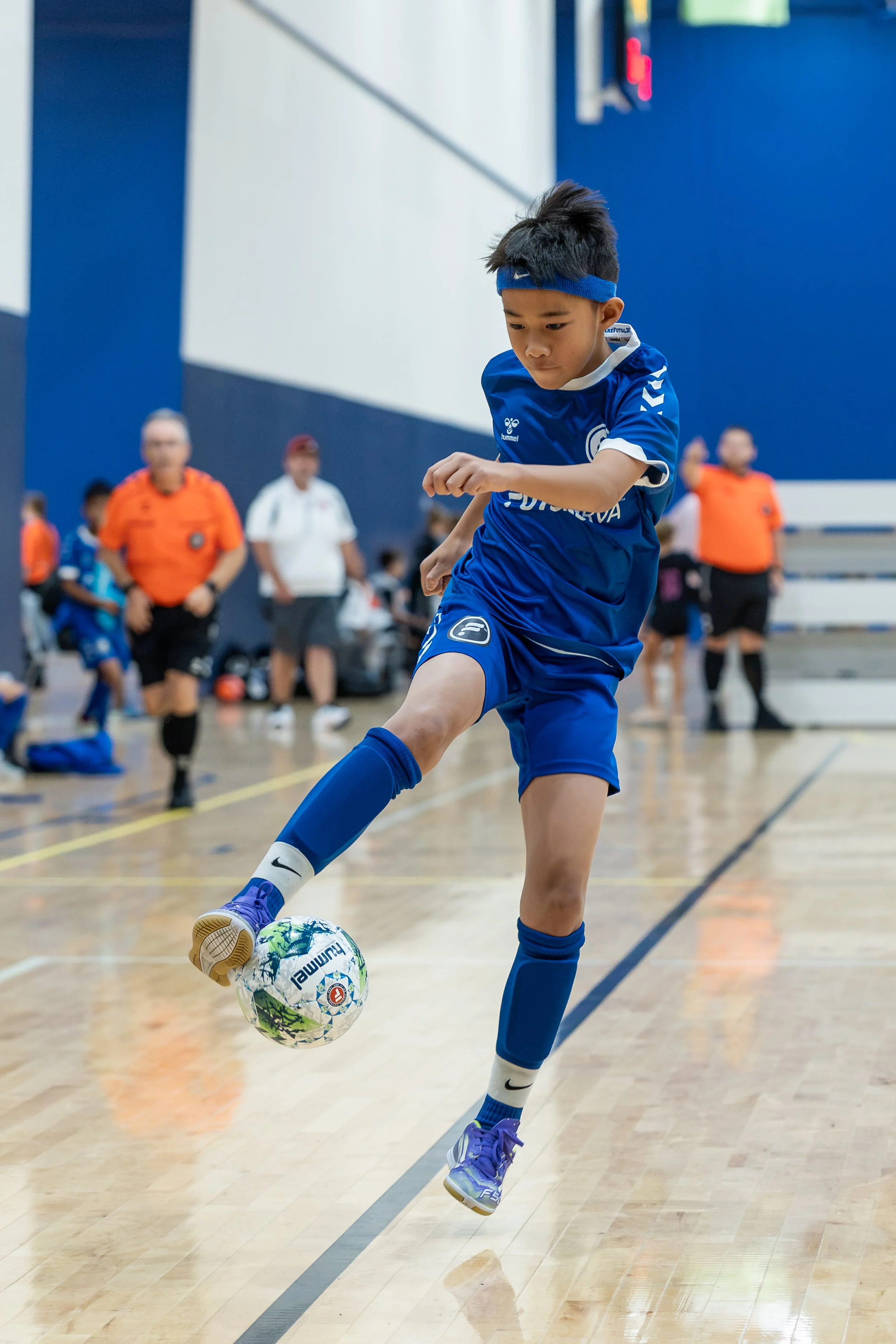
A structured opportunity for players to experience training and competition at the next age level, accelerating development through controlled challenge.
Program Structure
- 10–12 Play Up Nights per year
- Selected players from each training group invited based on readiness
- Training with higher level group followed by small-sided games
Selection Criteria
- Demonstrated technical proficiency at current age level
- Strong decision-making and tactical awareness
- Positive competitive mentality and coachability
- Physical and emotional readiness for increased challenge
The Complete Player, Not a Single Skill
Every player is assessed across five equally weighted areas of the game — because we develop well-rounded athletes, not one-dimensional specialists.
Decision-Making
Speed and quality of choices in game situations
Competitive Mentality
Mental resilience and performance consistency
Transition & Pressing
Defensive reaction and transition awareness
Technical Efficiency
Skill execution under game pressure
Tactical Awareness
Understanding of positioning and game principles
Weekly Communication Standard
What's Included Each Week
- Training focus and curriculum themes for the week
- Upcoming competition schedule and logistics
- Player development observations and team progress
- Program announcements and important dates
Protecting the Learning Environment
Parents are encouraged to support positively from the sidelines:
- No tactical instructions during games
- No coaching from sidelines
- No interference during training sessions